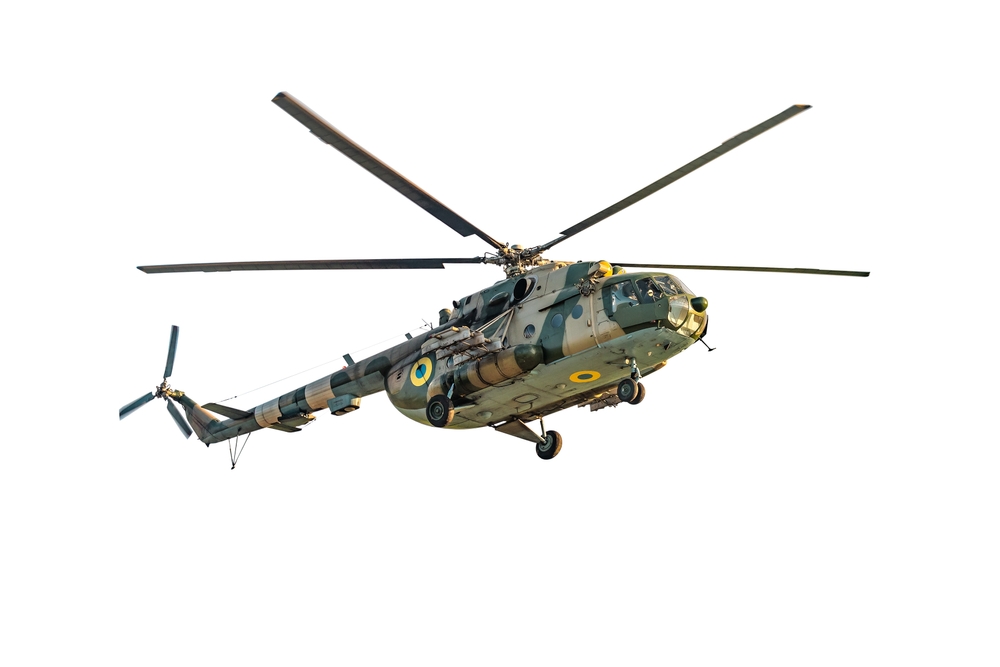
Evaluating Russia’s helicopter programme between 2022 and 2026
Think tank: RUSI
Author(s): Christoph Bergs
November 23, 2026
This report from UK think tank RUSI finds that Moscow is maintaining a dual-use helicopter ecosystem that directly benefits the armed forces.
Russia’s interest in helicopters remains strong: state-backed civilian investment is helping to replace wartime losses, preserve military-relevant production capacity and sustain a mobilisable reserve of aircraft, crews and support infrastructure.
This paper assesses Russia’s helicopter programme from 2022 to 2026. It finds that by using civilian backed programme to support production, Moscow is maintaining a dual-use helicopter ecosystem that directly benefits the armed forces.
This has permitted Russia to replace Mi-8 losses incurred in Ukraine as part of its national fleet and sustain ongoing deliveries. However, the sector faces serious structural pressures: the collapse of export revenues, cost-capped state procurement, supply-chain disruption, debt and a persistent shortage of engines and spare parts. Engine production at UEC-Klimov likely remains the main constraint on higher output and on the operational readiness of the wider fleet.
Key Recommendations
- Treat civilian helicopter procurement as defence-relevant investment, given the common industrial base, adaptable airframes and Russia’s state-owned national fleet framework.
- Consider ongoing industrial investments as a key indicator that Russia retains an interest in air assault forces and exploiting vertical lift to support military operations.
- Track the KPGA-2030 mid-programme revisions for evidence of changes in funding, production priorities and military demand.
- Assess the shadow reserve alongside military inventories, which includes pilots, maintainers, repair capacity and state-leased Mi-8s.
- Monitor engine production and spare-parts availability as the leading indicators of Russia’s ability to increase helicopter output and maintain fleet readiness.
For defence and security stakeholders, this paper shows that Russia retains a viable helicopter industrial base and can sustain core Mi-8 production, but its ability to expand output or restore broader fleet availability depends on overcoming engine and component constraints.