


Reports

Cultural heritage predation in Iraq
This report from UK think tank Chatham House looks at the sectarian appropriation of Iraq's past. Since 2003, Iraq’s elites have appropriated the country’s rich cultural heritage in the service of various undesirable agendas. These range from commercialization to the propagation of sectarian and exclusionary political or religious narratives. Large sections of Iraq’s cultural heritage...


Forest sector revenues in Ghana, Liberia and the Republic of the Congo
This report from UK think tank Chatham House looks at the impact of forestry reforms on collection and disbursement. Improved transparency and accountability are crucial to strengthening the management of forest sector revenues. Consequently, this has been a particular focus of the international community – through the EU’s Forest Law Enforcement, Governance and Trade (FLEGT)...
Inclusive trade: four crucial aspects
This latest report from UK think tank the Institute of Development Studies looks at the conceptualisation of ‘inclusive trade’. This Working Paper contributes to the conceptualisation of ‘inclusive trade’. The review adopts a deliberative approach while considering the direct and indirect distributive dimensions of trade. It draws attention to issues across four central aspects of...


Against the odds
This report from UK think tank the Institute of Development Studies looks at action for empowerment and accountability in challenging contexts. How and under what conditions does citizen-led social and political action contribute to empowerment and accountability? What are the strategies used, and with what outcomes, especially in settings which are democratically weak, politically fragile...

Facilitating progress towards SDG2: Zero Hunger
This report from UK think tank Chatham House looks at proposed reforms to leadership, governance and coordination in the UN Rome-based agencies. Sustainable Development Goal 2: Zero Hunger (SDG2) remains out of reach. SDG2 progress has slowed over the last few years, and the impact of the COVID-19 pandemic is expected to exacerbate the problem....

Reforming Venezuela’s electricity sector
This report from UK think tank Chatham House looks at options and priorities for rebuilding a collapsed system in Venezuela. In Venezuela, as around the world, the provision of reliable and affordable electric power is essential for the availability of vital humanitarian services such as healthcare and water supply, as well as enabling public transport,...

Vulnerability and poverty during Covid-19: religious minorities in Nigeria
This report from UK think tank Institute of Development Studies looks at the effect on religiously marginalised groups from the covid-19 pandemic. The Covid-19 pandemic has had direct and indirect effects on religiously marginalised groups, exacerbating existing inequities and undermining ambitions for those ‘furthest behind’ to be reached and supported through the Sustainable Development Goals...

Vulnerability and poverty during Covid-19: religious minorities in India
This report from UK think tank Institute of Development Studies looks at religious minorities living in urban slums in Tamil Nadu and Karnataka states in India. This policy briefing, written by Dr Joanna Howard (IDS) and a co-author (who must remain anonymous for reasons of personal security), draws on research with religious minorities living in...
Linking sovereign debt to climate and nature outcomes
This report from UK think tank the IIED provides a guide for debt managers and environmental decision makers. As countries grapple with the triple crisis of debt, climate change and nature loss, compounded by the impacts of the COVID-19 pandemic, multiple innovative solutions in sustainable finance are beginning to gain traction. These innovations towards an...

Loss and damage case studies from the frontline: a resource to support practice and policy
This report from UK think tank IIED provides case studies and evidence for stakeholders from climate-vulnerable countries looking for practical solutions. Loss and damage is an urgent issue: the world’s least-resourced communities and countries are increasingly unable to adapt to or absorb worsening climate impacts. Greater international support is overdue, but the realities and costs...
Tackling loss and damage: lessons from vulnerable countries
This report from UK think tank IIED looks at practical solutions to the unique challenge of loss and damage that communities and ecosystems face. Communities and ecosystems around the world are experiencing unprecedented extreme weather events. Driven by climate change these shocks will worsen with every increment of global heating, exposing billions of people to...
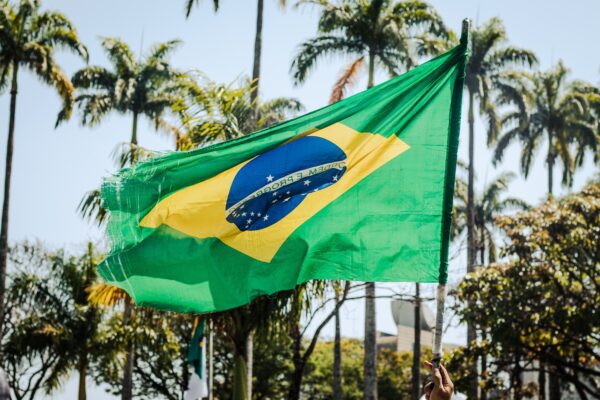
Rethinking the Brazilian Amazon
This report from UK think tank Chatham House looks at sustainable development in the Brazilian Amazon. The Brazilian Amazon, which has long been a symbol of abundant natural and cultural wealth, is at risk of becoming savannah following years of deforestation and degradation. The region could support a bioeconomy of unrivalled richness: however, this cannot...
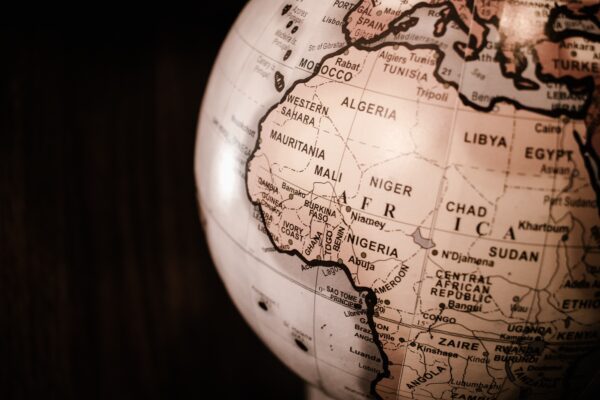
Surveillance law in Africa: a review of six countries
This report from UK think tank the Institute of Development Studies provides the first systemic comparison of surveillance laws in Africa. Mass surveillance is being carried out by governments in six countries across Africa with existing laws failing to protect the legal rights of citizens, new research finds. The study Surveillance Law in Africa: a...

What near-term climate impacts should worry us most?
This report from UK think tank Chatham House looks at how to support the most exposed and vulnerable societies to reduce regional and global climate risks. This research paper – drawing on insights from 200 experts – highlights that, within the current decade, climate hazards are expected to have increasingly serious disruptive impacts. While many...

Innovative financing for Africa: harnessing debt for climate and nature
This report from UK think tank the IIED looks at linking debt financing to climate and nature KPIs. Africa is severely impacted by the triple crisis of debt, climate change and nature loss. The continent’s debt now stands at more than 70% of GDP. There is potential to address these crises through ‘general purpose’ debt...