


Reports

Boosting the FATF’s global asset recovery responses
This report from UK think tank RUSI assesses whether the updated Financial Action Task Force recommendations address weaknesses in asset recovery responses. This Policy Brief assesses the question of whether the updated Financial Action Task Force Recommendations 4 and 38 address weaknesses in asset recovery responses. Asset recovery is the process by which the proceeds...

The great risk transfer: employment and financial wellbeing
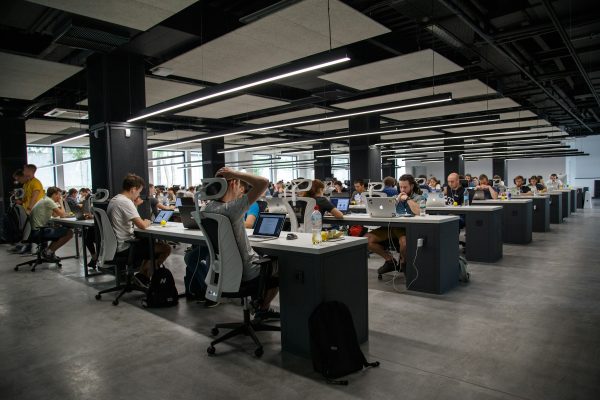
This report from UK think tank The David Hulme Institute examines the impact of the great risk transfer on individuals and society through the changing relationship between employer and employees. This latest research which investigates the Great Risk Transfer and the changed relationship between employment and financial wellbeing, published in partnership with the Institute and...


Market-based reforms to the UK economic sanctions regime
This report from UK think tank the Adam Smith Institute looks at market-based reforms to the UK's economic sanctions regime. The UK’s current sanctions regime is dysfunctional, as exemplified by the failure to place meaningful pressure on Russia to abandon its invasion of Ukraine. The intent of these sanctions was to damage the Russian economy...


Degrade and deny
This report from UK think tank the Adam Smith Institute considers potential next steps for the UK’s sanctions strategy. This paper considers potential next steps for the UK’s sanctions strategy, drawing on the academic literature and the growing evidence base to suggest what an “Economic Sanctions Strategy 2.0” might look like. In doing so, it...

Shopping for mass destruction: North Korea’s illicit procurement networks
This report from UK think tank RUSI draws on underexploited source material to offer an overview of North Korea’s procurement networks over the past five years. This paper analyses North Korea’s procurement networks, particularly in view of North Korea’s programmatic successes and recent geopolitical shifts in Russia’s relationship with North Korea as a result of...

How to run the next multi-year spending review
This report from UK think tank the Institute for Government says that Labour's missions need a reformed spending review process. The approach taken in recent spending reviews is not up to the job of achieving Labour’s missions. This report shows how the existing process fails to align government spending with strategic priorities and long-term value...


Shadow expenses
This report from UK think tank the Institute of Economic Affairs provides a list and numerical count of regulatory measures across the six largest parties by vote share. The general election campaign has focused on tax and spending promises, with much less attention paid to proposed regulatory measures. Regulations often have well-intentioned goals, including protecting...


Capital spending in public services: fixing how the government invests in the NHS, schools and prisons
This report from UK think tank the Institute for Government reveals the impact of the UK’s historically low – and badly spent – capital budgets. Crumbling buildings, creaking IT and a lack of equipment will continue to seriously hamper public service performance unless the next government takes a new approach to capital spending. This report,...

The quantity theory of money: a new restatement
This report from UK think tank the Institute of Economic Affairs emphasises the importance of a broadly defined money aggregate in the determination of nominal national income and wealth. The overwhelming majority of economists were wrong in their forecasts about the consequences of the Covid-19 pandemic. They believed that it would result in years of...

Pensions: a vision for the future
This report from UK think tank the Social Market Foundation proposes a vision for a simpler, fairer and more sustainable pensions landscape. The pensions landscape is complex and unsustainable in its current form. This Social Market Foundation report proposes a vision for a simpler, fairer and more sustainable pensions landscape, incorporating the three pillars of...

Debanked
This report from UK think tank the Institute of Economic Affairs examines the economic and social consequences of anti-money laundering regulation. Debanking became a news story in 2023 when Nigel Farage alleged that Coutts had closed his account because its executives disapproved of his political opinions. A study by the Financial Conduct Authority (FCA) revealed...

Financing the future economy
This report from UK think tank Power to Change looks at how community businesses can access the right finance to achieve their ambitions. This report draws on what Power to Change has learned from funding, supporting and advocating for community business since 2015 about the challenges community businesses face in accessing the right types of...
When to run the next spending review
This report from UK think tank the Institute for Government recommends that the next government must hold an urgent spending review before a budget 'cliff edge'. With the UK facing levels of government spending uncertainty not seen in decades, this report warns that whoever wins the general election should launch a one-year spending round within...

Up for grabs
This report from UK think tank the Social Market Foundation presents evidence on public attitudes to the pension ‘pot-for-life’ proposal. The Social Market Foundation recently published proposals for ‘member choice’ over pensions, whereby individuals can direct their contributions to a scheme of their choice. Meanwhile, the government is consulting on related proposals for a ‘lifetime...

Zero choices: Swapping zero-hour contracts for secure, flexible working
This report from UK think tank The Work Foundation investigates the contemporary use of zero-hour contracts in the UK. Analysis by the work foundation has found that a record 1.1 million working age people primarily work under zero-hour contracts, the poster child for insecure work. Our new briefing investigates the contemporary use of zero-hour contracts...
