


Reports

Building global prosperity
This report from UK think tank Chatham House looks at proposals for sustainable growth to help developing countries ‘build back better’ after COVID-19. The G7 has launched a partnership designed to help developing countries ‘build back better’ after COVID-19. This ambition is coming up against multiple challenges, but the pandemic created an opportunity to transform...


Strengthening anticipatory risk response and financing mechanisms for social protection
This report from UK think tank IIED looks at a practical approach to tackling loss and damage. Climate change loss and damage is leading to increasingly devastating impacts on poor and vulnerable people. This paper explains how best to equip social protection programmes to help communities better absorb the effects of climate risks, adapt to...


Biocredits to finance nature and people
This report from UK think tank IIED looks at biodiversity credits, or ‘biocredits’, are emerging as a tradeable unit of biodiversity. Biodiversity is degrading at alarming rates, and people living in biodiversity-rich areas often bear the heaviest costs of biodiversity loss and inequitable conservation efforts. Biodiversity credits, or ‘biocredits’, are emerging as a tradeable unit...

Barriers to reporting ‘Suspicious Activities’
This report from UK think tank RUSI looks at how communities in Kenya have responded to the request of increasing reporting of ‘suspicious activities’. This paper empirically explores how communities have responded to the request of increasing reporting of ‘suspicious activities’. More specifically, it explores to what extent community members of Garissa and Lamu counties...


Mapping COVID-19’s web of impact
This report from UK think tank IIED looks at COVID-19 as a pandemic of amplified inequality and highlight its cross-cutting lessons. COVID-19 produced winners and losers: in vaccine access, care burdens, disease outcomes, income, education, healthcare, and many more. Since disadvantages intersect and compound, communities in poorer nations fared worst. In October 2022, nearly three...

The socioeconomic impact of Covid-19 in low- and middle-income countries
This report from UK think tank the Institute of Development Studies looks at Covid-19 impacts on industries, sectors and socioeconomic groups. This report provides a snapshot of the research undertaken and published by members of the IDRC-supported CORE programme. It sets out the main themes addressed by the research in relation to Covid-19 impacts on...

Loss and damage finance in the climate negotiations
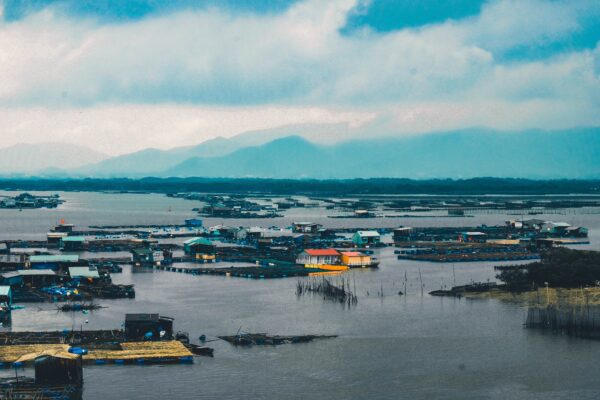
This report from UK think tank Chatham House looks at the political landscape on Loss and Damage finance, with the aim of increasing understanding. Ranging from extreme drought to apocalyptic floods and rising sea levels, climate change impacts are wreaking ever more severe destruction globally, causing widespread ‘loss and damage’ with disastrous implications for affected...

The good climate finance guide for investing in locally led adaptation
This report from UK think tank the IIED highlights different ways that Locally Led Adaptation can be financed and delivered. Locally led adaptation (LLA) is an approach which seeks to ensure that local people have individual and collective agency over defining, prioritising, designing, implementing, monitoring and evaluating adaptation actions. LLA is grounded in the belief...
The Sadrist movement in Iraq
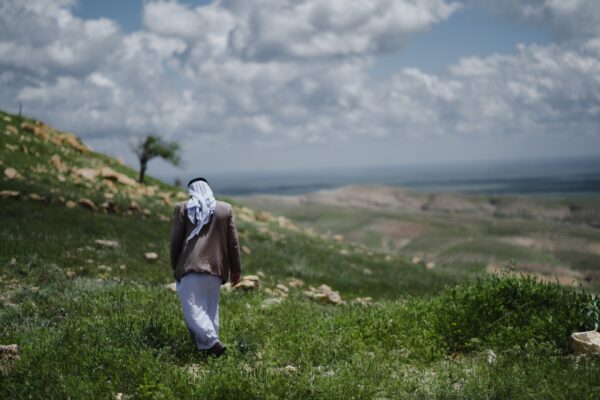
This report from UK think tank Chatham House looks at the shifting trajectory of the Sadrist movement and its implications for Iraq. The populist Iraqi cleric Muqtada al-Sadr, who led the Shia Islamist Sadrist bloc to a shock victory in the October 2021 elections, prompted heightened political instability in the country in 2022 by announcing...

After the Paris Agreement, the debt deluge
This report from UK think tank IIED looks at why lending for climate drives debt distress. Developing countries — especially least developed countries (LDCs) and Small Island Developing States (SIDS) — face huge challenges in financing their current climate and nature needs. The borrowing space of LDCs and SIDS is already significantly constrained by debt,...
Scaling sustainable energy services for displaced people and their hosts
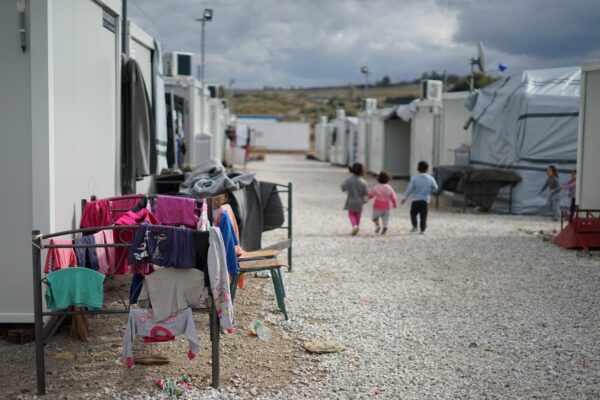
This report from UK think tank Chatham House looks at how refugees and displaced persons nearly always remain outside national energy policy. Access to clean, safe and sustainable energy – the focus of Sustainable Development Goal (SDG) 7 – is one of the principal needs of developing-country populations, for cooking, heating, light, communication, study, livelihoods...

Practical action to tackle loss and damage risks: ten guiding principles
This report from UK think tank IIED looks at the urgent need for practical action to address loss and damage caused by the climate crisis. The need for practical action to address loss and damage caused by the climate crisis is now urgent. Climate change impacts not only occur over a wide range of time...

Social protection and informal job market reform for tackling climate migration nexus
This report from UK think tank IIED looks at two diverse communities in India and how crises push them towards distress migration. By 2050, water stress, sea-level rise and crop failure from climate change may displace 31–72 million people across sub-Saharan Africa, South Asia and Latin America. Distress migration generates grave socioeconomic consequences — both...
IDS Annual Review 2021–22
This report from UK think tank the Institute of Development Studies looks at a year of conflict, climate change, and Covid-19. As we highlight in the IDS 2021–22 Annual Review, these uncertain times demand that development research be done differently, with new approaches to learning and knowledge exchange that engage policy actors and diverse communities....

Taking stock of smallholder inclusion in modern value chains
This report from UK think tank IIED looks at the promise and reality of including smallholders from developing countries in modern value chains. This report examines the promise and reality of including smallholders from developing countries in modern value chains as a path to sustainable development. Drawing on an extensive literature review and interviews with...